CFA Society Indonesia
Manufacturing Equity
The venture studio as a new investable asset
Tom West, CFA
15 October 2026 · The Westin Jakarta
CFA Society Indonesia
The venture studio as a new investable asset
Slides from a talk given to CFA Society Indonesia, The Westin Jakarta, 15 October 2026.
CFA Society Indonesia
The venture studio as a new investable asset
Tom West, CFA
15 October 2026 · The Westin Jakarta
Venture studio
Venture builder
Startup studio
Company builder
Startup factory
Relax. They’re all the same thing.
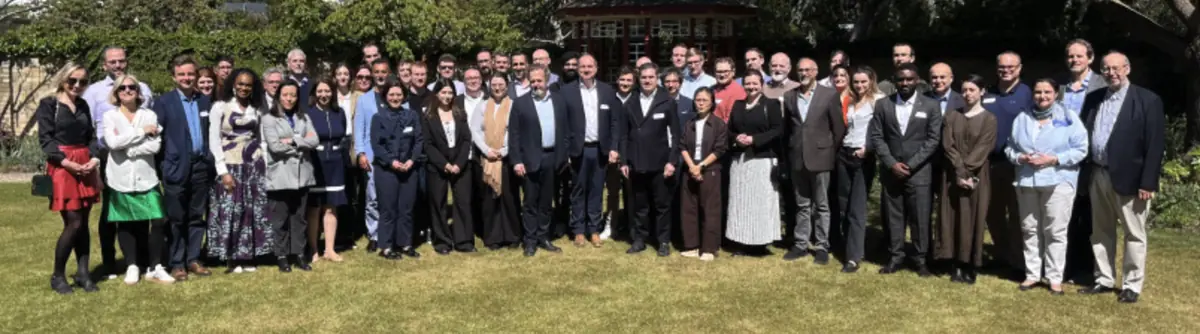
Cambridge, April 2026
Makes its own companies.
New companies for a corporate sponsor.
Turns research and IP into companies.
Only just beginning to take shape.
The most developed application, and the basis for the other three. Tonight, “studio” means this one.
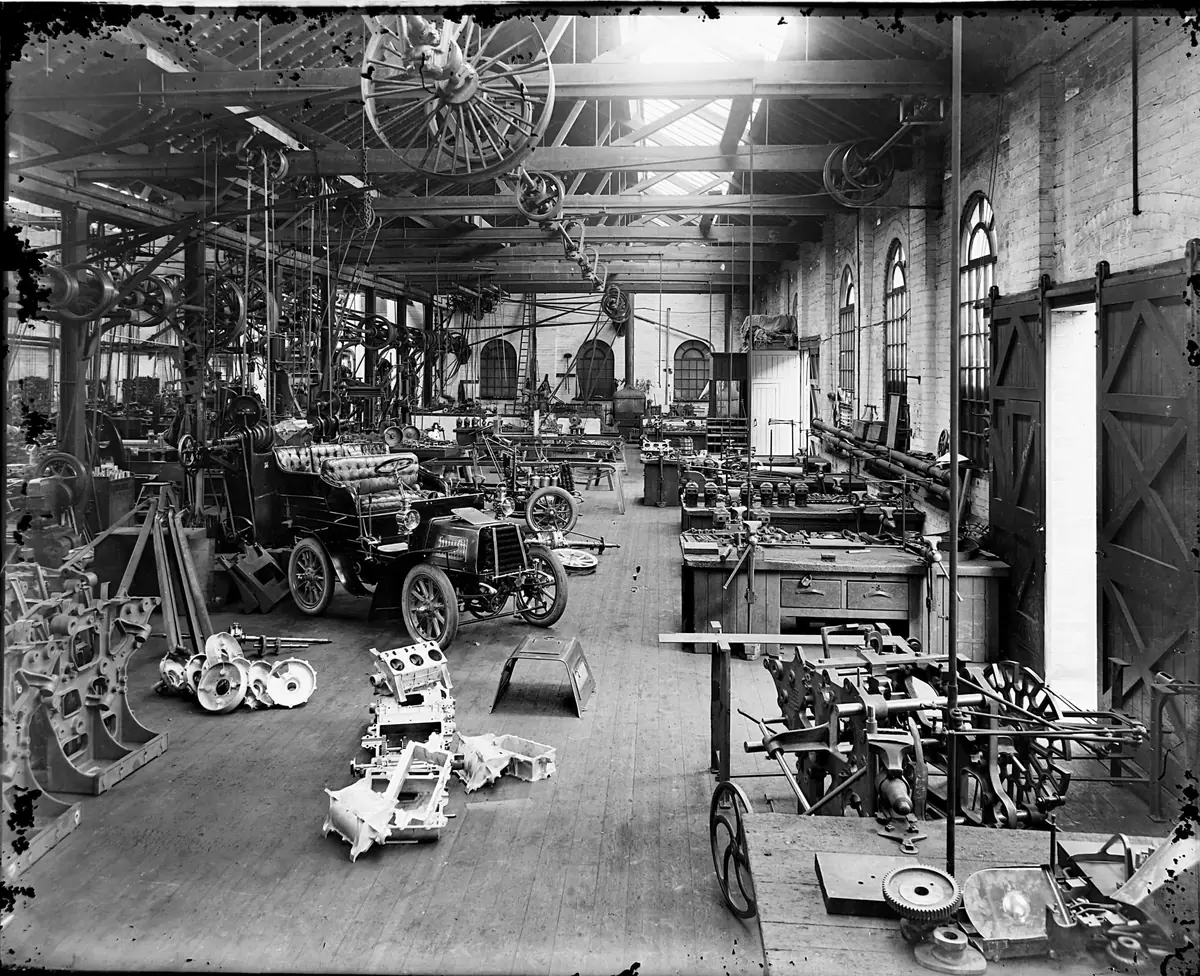
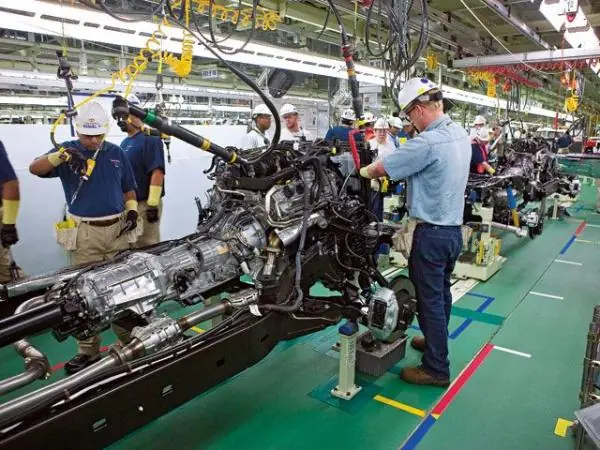
1906: cars assembled one at a time in a workshop. A well-made car cost about $2,700 and took hundreds of hours to put together.
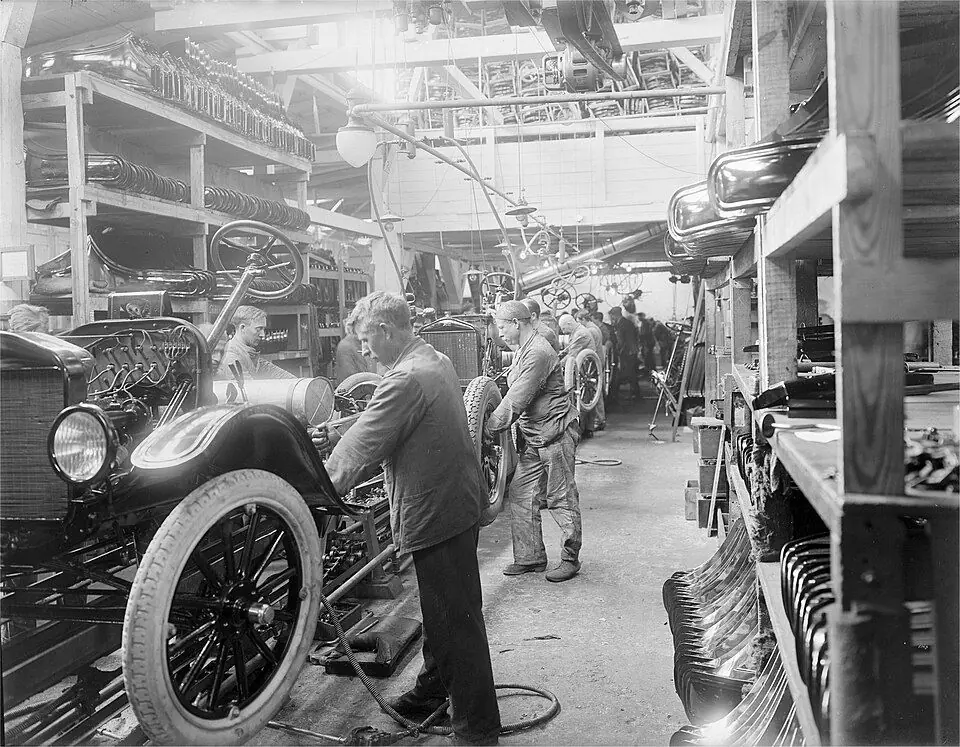
1913: the moving line. Chassis assembly fell from 12 hours to 93 minutes. By 1914, Ford could produce a car about every 3 minutes. By 1925, the cost of a Model T was $260.
Source: VC Lab / Decile, 2025 (about 600 first-time funds).
Studio funds as a share of new funds in the VC Lab programme
3%
4%
6%
13%
2022
2023
2024
2025
What are venture studios?
Why now, and who owns what?
What does early evidence actually show?
How would I make money from it?
Where is it going?
What should I do when I get a studio deck?
One
A venture studio is a firm that makes companies, instead of buying into them.
Also: venture builder · startup studio · company builder · startup factory
 Flagship Pioneering
 Rocket Internet
 Atomic
[Logos to source, monochrome. Text placeholders for now.]
Flagship Pioneering
Rocket Internet
Atomic
 Moderna
 Zalando
 Hims & Hers
World-changing health platform
a business-model replicator
also Zalora, Lazada
a consumer-brand builder
These companies are the factories’ products. Tonight is about the factories.
| Incubator | Accelerator | Venture Capital | Studio | |
|---|---|---|---|---|
| Who finds the idea | Founder | Founder | Founder | |
| Who is the founder | A person | A person | A person | |
| Support | Space, advice | Short cohort, small cheque | Capital, a board seat | |
| How it’s run | By the founder | By the founder | By the founder | |
| Equity | Small or none | Small stakes | Minority stakes | |
| Upside | Small | Many small, a few breakouts | The outlier |
| Incubator | Accelerator | Venture Capital | Studio | |
|---|---|---|---|---|
| Who finds the idea | Founder | Founder | Founder | The studio |
| Who is the founder | A person | A person | A person | The studio. It recruits a CEO. |
| Support | Space, advice | Short cohort, small cheque | Capital, a board seat | Co-founding |
| How it’s run | By the founder | By the founder | By the founder | Central, factory-like |
| Equity | Small or none | Small stakes | Minority stakes | Founder-sized |
| Upside | Small | Many small, a few breakouts | The outlier | ? |
A VC backs founders. A studio IS a founder, over and over.
Sources: Coelsch-Foisner et al. (2026); Moiana et al.; Coelsch-Foisner, Vandeweghe and Clarysse; Köhler and Baumann.
Entrepreneur
Operator
Investor
Studio
Entrepreneur: finds and validates the idea. The founder’s job, done by the firm.
Operator: builds it.
Investor: funds it and manages the portfolio.
VC sits in the investor circle; accelerators straddle investor and operator; incubators at the edge of operator.
Venture Studio Forum (2025): “a company that builds other companies and simultaneously acts as an entrepreneur, investor, and operator.”
Six stages. Gates between them. Most ideas stop before they become companies.
Entrepreneur
Operator
Investor
Idea
Validation
MVP
Customer fit
Recruit the CEO
Spin-out
Validation: is the problem real, and will anyone pay? · MVP: the simplest version that works · Customer fit: real customers keep buying · Then the studio recruits a CEO and spins the company out.
About ten ideas in, one company out.
Ford made the assembly line. Toyota later added a cord to the line: any worker could pull it and stop the line when something was wrong. The gates are the studio’s cord.
After Gutmann (2019), venture-building process.
Two
Financial
Operational
Private equity
Financial engineering & leverage
Operating partners and value-creation teams
Venture capital
Writing cheques
Platform teams, talent networks
PE: Binfare et al., Institute for Private Capital (2022): leverage’s share of buyout value creation fell from 46% before 2000 to 22% in 2008 to 2019; Kaplan and Strömberg (2009), financial, governance and operational engineering. VC: VC Platform, The Power of Platform (850 firms): platform staff grew from 1 in 16 to 1 in 8 of VC team members since 2000.
History shows new private assets maturing along similar paths.
Agile private capital
A standard vehicle
Rules make room
Data and benchmarks
Wealthy families’ money, operating often on high trust and aligned incentives.
YC’s post-money SAFE only arrived in 2018.
1978: US pensions allowed into private equity after decades of PE activity.
Institutions follow. IPSs for large capital allocators are slow to evolve.
Studios today
No standard vehicle, no benchmarks: a studio doesn’t fit most investment policies. So studios and agile investors improvise.
Creates equity at cost of time, materials and infrastructure.
Earns founding equity, for finding and validating the idea. Increasingly, this includes the initial build.
Burns cash to operate and continue building, earns no equity for this role.
Earns fees for running and improving the build. May earn outside revenue. (!)
After investing own cash, often needs a vehicle an LP recognises.
Earns fees and carry, for raising and managing capital.
Management fee and carry
What the fund’s managers earn for raising and managing capital.
Management services agreement (MSA)
The studio charges its companies for its team’s work, billed monthly: a bill-back.
Look for a payment not tied to real work, or two payments for the same work.
Next: John Carbrey’s practitioners’ map of how they improvise (2020), built with input from law firms and studios.
Seven players. We’ll use these entities to discuss how incentives and responsibilities are aligned (or not).
LPs
fund investors
Fund II ...
later vintages
Fund I
the fund
GP
runs the fund
Studio (OpCo)
the equity factory
Studio Partners
usually own both
NewCos
the new companies, the products
Outside Capital
Overlap: same owners
Structures, simplest first · 1 of 5
Studio
HoldCo = OpCo
Studio Partners
the studio’s owners
NewCos
the companies it founds
founds and builds
owns NewCo equity
Work: runs, builds
Equity: who holds the shares
Overlap: same owners
No fund. The studio holds its stakes directly.
Pros
One owner, so everyone is aligned.
Simple to set up and explain.
Cons
Cash flow vs OpEx + CapEx!
Can’t fund its winners without substantial capitalisation.
Structures, simplest first · 2 of 5
Studio
HoldCo = OpCo
Studio Partners
the studio’s owners
NewCos
the companies it founds
Syndicate
outside investors
co-invests, deal by deal
founds and builds
keeps a founder stake
Money: capital, fees, payments
Work: runs, builds
Equity: who holds the shares
Overlap: same owners
Outside investors come in company by company.
Pros
Fixes follow-on funding.
An outside investor checks each deal.
Cons
Splits ownership deal by deal.
Raising each deal takes focus off building.
High “financing risk” for the studio and its syndicate (Nanda).
Structures, simplest first · 3 of 5
LPs
fund investors
Fund I
owns the companies
GP
runs the fund
Studio (OpCo)
the studio team
Studio Partners
own both
NewCos
the companies it founds
capital
runs it
carry
invests
holds the equity
(large?) management fee
builds, paid from
the fee
Money: capital, fees, payments
Work: runs, builds
Equity: who holds the shares
Overlap: same owners
The other simple form, from the capital side.
Pros
One pool of capital funds every company.
LPs get a vehicle they recognise.
Cons
The fund is the only funder. So avoids the VC trap?
The fee pays for the build, so the fee is large.
Structures, simplest first · 3 of 5
LPs
fund investors
Fund I
owns the companies
GP
runs the fund
Studio (OpCo)
the studio team
Studio Partners
own both
NewCos
the companies it founds
capital
runs it
carry
invests
holds the equity
management fee
builds, paid from
the fee
monthly bill-back, under an MSA
Money: capital, fees, payments
Work: runs, builds
Equity: who holds the shares
Overlap: same owners
Some single funds also bill every company, every month.
Pros
One pool of capital funds every company.
The team is paid for its work.
Cons
The creator is the only funder.
The fee pays for the build, so the fee is large.
Now it’s paid for volume: the more companies it starts, the more it bills.
Structures, simplest first · 4 of 5
LPs
fund investors
Fund I
the dedicated fund
GP
runs the fund
Studio (OpCo)
the factory
Studio Partners
own both
NewCos
the companies
Outside lead
prices a round
capital
runs it
fee and carry
invests
holds equity
builds
keeps a founder stake
Money: capital, fees, payments
Work: runs, builds
Equity: who holds the shares
Overlap: same owners
A studio plus a separate fund, run by the same partners. The fund owns none of the studio.
Pros
The studio builds; the fund invests.
LPs get a fund they recognise.
What would worry you here?
Cons
The same people sit on both sides of every deal. An outside lead on each round is critical.
Structures, simplest first · 5 of 5
LPs
fund investors
Fund I
invests in both
GP
runs the fund
Studio (OpCo)
the factory
Studio Partners
own both
NewCos
the companies
Outside lead
prices a round
capital
runs it
fee and carry
invests
holds the equity
builds
keeps a founder stake
invests in the studio
owns a slice of the studio
Money: capital, fees, payments
Work: runs, builds
Equity: who holds the shares
Overlap: same owners
One new arrow: the fund owns part of the studio.
Pros
“No win for management without a win for the LPs.” (Carbrey)
The fund shares in the studio’s fees and stakes.
Cons
Two entities to diligence, and a price to agree for the fund’s slice of the studio.
How exposed each structure is to each conflict, and to running short of capital: low, medium or HIGH.
| Structure | Who gets paid for what | Who sets the round price | Who decides what gets funded | Who owns what | Who funds the winners capital, not conflict |
|---|---|---|---|---|---|
| Single studio | low | medium | low | medium | HIGH no reserves |
| + syndicate | low | medium | medium | medium | medium |
| Single fund | medium | medium | HIGH no outside check | low | low |
| Dedicated fund | HIGH paid three ways | HIGH sells to its own fund | HIGH LP money, studio’s pick | HIGH same partners, both sides | medium |
| Dual entity | medium | medium | medium | medium | low |
The ones with a fund conflict on pricing and allocation. The ones without can’t fund their winners. External price action helps reduce conflicts of interest.
Fictional V.S., the dedicated fund, up close
Fictional V.S.: illustrative
LPs
fund investors
Fund I
the dedicated fund
GP
runs the fund
Studio (OpCo)
the factory
Studio Partners
on both sides
NewCos
the companies
Outside lead
prices a round
capital
runs it
fee and carry
invests
holds equity
builds
MSA fees
keeps a founder stake
Money: capital, fees, payments
Work: runs, builds
Equity: who holds the shares
Overlap: same owners
Three questions already in your head.
What does the GP fee buy?
What does the MSA buy?
Where are the guardrails?
Fictional V.S., the dedicated fund, up close
Fictional V.S.: illustrative
LPs
fund investors
Fund I
the dedicated fund
GP
runs the fund
Studio (OpCo)
the factory
Studio Partners
on both sides
NewCos
the companies
Outside lead
prices a round
capital
runs it
fee and carry
invests
holds equity
builds
MSA fees
keeps a founder stake
Money: capital, fees, payments
Work: runs, builds
Equity: who holds the shares
Overlap: same owners
1
2
3
4
1 Who gets paid. Is the build paid for twice? Three times?
2 Who sets the price. Without an outside lead, the Studio sits on both sides of the round.
3 Who decides what lives? LP money can prop up the studio’s weaker companies.
4 Who owns what. The same partners on both sides?
Studio (OpCo)
provides the team
NewCo
pays every month
MSA
1. Who approved it on the new company’s board, when the studio controlled that board?
2. Is it priced at cost, cost plus, or market?
3. Does it end at spin-out, or keep running after outside investors arrive?
4. How much build is really left before the company scales? Could another provider do it if needed?
5. Can the CEO cancel it?
One NewCo, example cap table and the questions it raises.
Studio, common: 30-70%...?!
“Phantom founder”: a studio that keeps a founder-sized stake but stops showing up after spin-out. Reads as dead equity to investors.
Major red flag for VCs.
Higher studio stakes can be defensible for cash flowing NewCos.
The question “How much of the founding function is complete?”
CEO, common
[__%]
Option pool
[__%]
Fund, preferred
[__%]
Outside seed
[__%]
The studio, as founder, holds common, and so does the CEO when recruited.
How much does the CEO own, and will they stay motivated?
Fictional V.S.: illustrative
If you’re an LP in the fund
Fictional V.S.: illustrative
LPs
fund investors
Studio Partners
on both sides
Fund I
leads the round
Studio (OpCo)
book value up
NewCo
first priced round
Outside lead
absent
2
marks up the studio’s book
Founding equity sits on the books at almost nothing. The studio’s own fund leads the first priced round. The book jumps, on a price set by a related party.
Ask who set the price.
choosing sides
Fictional V.S.: illustrative
LPs
fund investors
Studio Partners
on both sides
Fund I
THE FUND
Studio (OpCo)
THE FACTORY
One NewCo
THE PRODUCT
Outside lead
prices a round
If you could buy only one, which?
Own the factory: shares in OpCo
Finance its output: Fund I
Buy one product: a NewCo
Three
53%
studio IRR, against 21% for VC
25 mo
to Series A, against 56
SOURCE: the Global Startup Studio Network’s survey of 258 studio startups (2022), compared with a VC figure from Industry Ventures (2017)
Not wrong, necessarily. Just not evidence.
Studio portfolios: fewer zeros, a fuller middle, a thinner tail
VC portfolios: total loss is the most common outcome, with a long tail of outliers
Illustrative shapes, by multiple of money invested. VC: about 65% of financings return less than 1x; about 4% return more than 10x (Source: Correlation Ventures).
BVSR’24: similar median growth, but VC shows a far wider spread and more outliers; studio outcomes cluster. Exits sooner: 4.5 years against 5.3. Studio side: 38 deals.
Scheuplein and Kahl (Germany, 2017): company builders’ portfolio companies grew employment faster than other VC-backed companies.
Best-funded studio companies raised about half what top accelerator companies did, and grew faster.
Each source is imperfect. None says studios win. Together they say studios are different. Judge this with the power-law playbook and you’ll misread it.
| Incubator | Accelerator | Venture Capital | Studio | |
|---|---|---|---|---|
| Who finds the idea | Founder | Founder | Founder | The studio |
| Who is the founder | A person | A person | A person | The studio. It recruits a CEO. |
| Support | Space, advice | Short cohort, small cheque | Capital, a board seat | Co-founding |
| How it’s run | By the founder | By the founder | By the founder | Central, factory-like |
| Equity | Small or none | Small stakes | Minority stakes | Founder-sized |
| Upside | Small | Many small, a few breakouts | The outlier | ?A run of solid exits |
The bet the model makes: losers die early and cheaply, and the upside comes from a run of solid exits, or the holding of cash flowing businesses, rather than one or two outliers.
The early data is consistent with this assessment, but the sample is small.
among companies that already exist
among many ideas, before a company exists
About ten ideas in, one company out. Most of the zeros never become companies.
Remember Toyota’s stop cord: in venture studios, gates are designed to stop the assembly line before a bad idea becomes a company.
Flagship tests 80 to 100 ideas a year and launches 8 to 10. Most studios I’ve seen launch four to six a year once running.
A VC’s fee pays for selection. A studio’s pays for preselection and initial build (the founding function).
1
BVSR: PhD-led, industry funded study. Survivorship and self selection biases.
2
My MBA thesis: when, and how, do the owners of studio-built companies get paid?
3
My analysis: what you’re about to see
4
Cambridge, April 2026: presented, and discussed.
The factory, not the products
117 studios at least two years old, from seven regions; 38 had at least one exit. Controlled for studio age.
| Usual suspects | Predicts exits? |
|---|---|
| Scale (FTEs, fund size) | No |
| Specialisation (vertical, niche) | No |
| Product characteristics: MVP cost, complexity, speed | No, nothing close (p = .36 to .78) |
| Talent deployment: founders with exits, and cofounders deployed across more stages of the build | Yes (p = 0.031 after age) |
Practitioners and academics point the same way. The people are where to look. This leads us to evaluate the studio team and its hires.
Share of the variation in outcomes explained by which studio a venture came from. 350 studios, 34 countries.
Funding and headcount
about a third
Exits
about a fifth
Industry, country
under 10% each
In fund terms, this is similar to manager dispersion. You’re not buying “venture studios” as a category. You’re buying an individual studio. Like fund managers, studios have unique characteristics that affect return.
Patel and Chan, Venture Capital (2024), Table 3: studio effect 32% (funding), 33% (headcount), 20% (exits). Bar lengths indicative.
One finding among 22 tests. At that many, one can come up by chance.
Cross-sectional data, with survivorship in it.
None of it measured returns, just likelihood of equity acquisition.
So: a different shape, made by preselection, and the people are where to look.
Good products don’t automatically mean a good return for the factory’s owner.
Four
High costs against capital deployed. TVPI near 1x for years, as any young fund’s is.
The studio OpCo entity itself is better suited to evergreen investments, particularly if it’s also performing a HoldCo function.
Source of deal flow.
Looks slow to return.
Little revenue. Negative cash flow for several years in most studio models until NewCos go to market.
Looks like it’s failing
A portfolio of cheap options on companies, plus a machine that keeps writing new ones.
This is what it produces.
Studio value = stakes already owned + PV(future output) − PV(running the plant) − leakage + DCF (outside revenues)
Future output = throughput × yield × ownership at exit × exit value
companies launched a year
share that reach an exit: preselection, effectiveness of the particular studio’s operating model.
what’s left after dilution: the structure of initial and future funding of NewCos
consider the shape of the returns and time to liquidity. Discount appropriately.
payments that don’t follow function
the cost of the assembly line: next
Let’s look at today’s venture studio economics, employing a Lean Startup method.
Fictional V.S.: illustrative
Validation
[$20k · 2 mo]
MVP
[$250k · 9–12 mo]
Customer fit
[$150k · 3–6 mo]
Spin-out
Venture dependent
Idea
Validation
MVP
Customer fit
Recruit the CEO
Spin-out
$9M
average value per company, at exit or in cash returned, for Fictional V.S. to earn back its build costs plus 15% a year.
It doesn’t need a unicorn (but might get one with further financing).
It needs a steady run of solid companies.
Fictional V.S.‘s costings, illustrative. Assumed studio equity take of 30% per NewCo; 15% a year. Illustrative Lean Startup stage costs in brackets.
Four routes, and which seat each one pays.
1 · Exits
A company is sold or lists.
Studio exits came sooner than VC: about 4.5 years against 5.3.
Pays: factory, fund, product
2 · Secondaries
The studio sells part of its founder stake in a later round.
Cash before the exit, at a price someone else set.
Pays: factory
3 · Dividends
A company makes cash, and its owners keep holding it.
The “solid companies” route. No exit needed.
Pays: factory, fund, product
4 · Services income
MSA fees and outside clients.
Keeps the OpCo solvent. Too much of it pulls the studio off mission.
Pays: factory
The factory has four ways to get paid. The fund mostly waits for exits. Ask which route the deck in front of you depends on.
Exit timing and off-mission services: BVSR’24.
Fictional V.S., the dedicated fund, up close
Fictional V.S.: illustrative
LPs
fund investors
Fund I
the dedicated fund
GP
runs the fund
Studio (OpCo)
the factory
Studio Partners
on both sides
NewCos
the companies
Outside lead
prices a round
Money: capital, fees, payments
Work: runs, builds
Equity: who holds the shares
Overlap: same owners
Outside clients
services work
outside revenue
Studios selling venture services to corporates: about 18 alive for every one closed.
BVSR’24
The revenue keeps it alive, and pulls it away from building companies.
Five
[Early hand-built car, about 1905]
Workshop
One at a time
[Ford Highland Park line]
Ford
Fast: the assembly line
[1990s Toyota plant]
Toyota
Good: Lean Manufacturing
[BYD robotic line]
BYD / Tesla
Factory as one big robot
Building companies
Founder-led startup
one company at a time
Venture studios today
an assembly line run on Lean gates
Studios of tomorrow
post-lean
Lean’s unit of work was the minimum viable product. In a post-lean, venture studio context it becomes the minimum viable venture: the smallest version of the business that can win customers, get paid, deliver and repeat.
Post-lean and the minimum viable venture: Clausen and Hassel (2026, discussion paper).

Studios today run on Lean Startup: build the smallest thing, test it on customers, learn, repeat.
Validation
[$20k · 2 mo]
MVP
[$250k · 9–12 mo]
Customer fit
[$150k · 3–6 mo]
Spin-out
Venture dependent
Idea
Validation
MVP
Customer fit
Recruit the CEO
Spin-out
problem identification, problem validation
solution validation
optimisation
growth
Under this conventional venture paradigm, the fastest studios aimed to launch a venture in under 100 days.
When cloud computing cut the cost of starting a company, VCs adapted. AI is now retooling the assembly line itself.
Step names after Gutmann. Cloud precedent: Ewens, Nanda and Rhodes-Kropf. Fictional V.S. costs: illustrative.
Fictional V.S.: illustrative
Validation
$20k · 2 mo
→ $5k · 1 wk
MVP
$250k · 9–12 mo
→ $10k · 2–3 wk
Customer fit
$150k · 3–6 mo
→ $20k · 4–8 wk
Spin-out
Venture dependent,
funded by the seed raise
Idea
Validation
MVP
Customer fit
Recruit the CEO
Spin-out
$9M → $0.7M
The MVP gets 25 times cheaper. The company gets about 10 times cheaper. Customer fit is the strongest indicator of forward revenue, and now takes most of the pre-launch budget.
AI won’t just make studios faster. It’ll lower the bar they have to clear.
**Not all studios and industries are the same. E.g. DeepTech vs Software, BioTech vs Digital Services
Average value per company the studio needs to earn back its build costs plus 15% a year. Fictional V.S.‘s costings; assumed NewCo holding of 30%.
In a post-lean agentic coding paradigm, the costs of the founding function plummet.
The MVP is now the Model T. When something becomes cheap, it stops being an advantage.
$2,700
1906, built one at a time
$850
1908, the Model T launches
$260
1925, the Model T
Buyouts
Extra borrowing by buyout firms: share of the value created
46%
37%
22%
Before 2000
2000–2007
2008–2019
Once anyone could borrow, borrowing stopped being the edge.
Binfare et al., Institute for Private Capital (2022). 2,951 buyouts.
Studios
Fictional V.S.: cost of one pass down the line, before spin-out
$420k
$35k
Lean (today)
Post-lean
Once anyone can build, building stops being the edge.
Fictional V.S.: illustrative. Validation, MVP and customer fit.
So where is the edge now?
made it fast and cheap
made it good: the stop cord
translated to building companies
makes the right thing, fast and cheap.
Lean Startup assumes building is the expensive step. When building costs decline, the MVP stops being the constraint. What’s scarce is knowing which experiments are worth running, and which to stop. This knowing is the foundational edge of the venture studio.
Hassel et al., for “venture production”: ventures as the products of a repeatable process.
A studio’s stake is a founder’s stake, because the studio did the founding.
A founder alone, first product for about $10,000
Idea
Validation
MVP
Customer fit
Recruit the CEO
Spin-out
What studios still bring: customers, scaling, the people
AI puts the product within reach of one founder. The venture still needs judgment, domain expertise and a system that sells, delivers and repeats. That’s the studio’s job now.
$10,000: Fictional V.S.‘s new costings, illustrative. Product versus venture: Clausen and Hassel (2026, discussion paper).
A founder alone
1 person
Six ideas at once. One person’s hours. No one to stop the weak ones.
Would you back that founder?
A studio
A team, a defined process, capital released gate by gate
Six protoventures presented from 60+ original concepts. Each one stopped or funded at every gate.
Similar ambition, supported by a system.
Cheap building lets a founder start more companies.
It doesn’t give them more bandwidth or better judgement about what to build and what to stop.
Preselection is the job
Example: for every ten ideas in, perhaps one company out. Testing an idea now costs a few thousand dollars, so a studio can test far more of them than a solo builder.
10 ideas tested, 1 company built
The scarce work is now choosing which ones go on.
Where good choosing comes from
How the product is built
no link to exits
Who runs the stages
linked to exits
Judgement is wired into the system, not based on any particular product.
Most studio decks still lead with the product. That’s the wrong part of the factory to inspect.
Remember Toyota’s cord: anyone could stop the line. A studio’s gates are that cord.
Idea
Validation
MVP
Customer fit
Spin-out
Done well
Each gate is a stopping rule agreed before the work starts: the evidence we need, by when, or we stop.
Applied by someone whose job is to say no when the evidence isn’t there. Ideally, the system is rigid enough to make the decision before human sign-off.
Done badly
A studio with its own fund keeps funding its own companies. Stopping would feel like admitting a mistake.
The same conflict as in Fictional V.S.: the partners decide where the fund’s money goes. Classic VC trap.
Fictional V.S.: illustrative
Validation
Rule: 20 interviews confirm it
×
×
×
×
×
×
×
×
×
×
×
×
×
×
20 × $5k = $100k
MVP
Rule: 50 weekly users in 3 weeks
×
×
×
6 × $10k = $60k
Customer fit
Rule: 10 paying customers
×
3 × $20k = $60k
Spin-out
Seed priced by an outside lead
2 companies
$220k for 2 companies: about $110k each
Decision log: every go and every stop
Idea 04 · validation · rule set 3 Mar · 23 of 20 interviews · GO · $10k released
Idea 11 · validation · rule set 3 Mar · 6 of 20 interviews · STOP · $0
Idea 04 · MVP · rule set 17 Mar · 61 weekly users · GO · $20k released
Ask to see three ideas it kept funding and three it stopped. Does the record explain both?
Six
Agile private capital
A standard vehicle
Rules make room
Data and benchmarks
Studios today
Structures improvised, evidence thin, plant unpriced, costs moving. That’s why it’s hard to invest in.
Where do we sit in the model?
Fictional V.S.: illustrative
LPs
fund investors
Studio Partners
on both sides
Fund I
THE FUND
Studio (OpCo)
THE FACTORY
One NewCo
THE PRODUCT
Outside lead
prices a round
Factory: the plant and every stake. Every term, plant cost and leakage included.
Fund: the output, at a price. Lives with two of the conflicts: who sets the price, and who decides what lives.
Product: one exit value, the dilution ahead, and the studio’s services.
Your investment policy has no box for this. Here’s how to draw one.
| Investor | Factory equity | Fund investment | Product equity |
|---|---|---|---|
| Family offices, HNWIs | Fits: evergreen | Fits | Fits |
| Endowments | Possible: benchmark? | Fits | Limited |
| Pensions, insurers | Poor | Poor | Poor: concentration |
| VCs, funds-of-funds | Poor: vintage incompatible | Fits | Possible |
| Corporates | Possible: strategic | Possible: R&D or CVC | Fits: strategic |
| Angels | Possible: ticket size | Limited | Fits |
Factory equity: no end date, no distribution policy, no vintage, no benchmark.
Fund investment: highly dependent on fund terms and tenor.
Product equity: angels, follow on investors, VCs
Family offices and HNWIs: already deploying with evergreen capital and flexible mandates, agile capital.
Family groups have built companies this way for generations: a venture studio by another name.
TRUST
family groups, family offices
CONTRACT
a standard vehicle
Rules make room
Data and benchmarks
at-cost service agreements, independent marks, benchmarks
Economists describe business groups as substitutes for missing institutions, with one risk that comes with any group of related companies: tunnelling, value moved between them at another party’s expense.
Inspecting a studio means checking how much of the trust has been turned into contract.
Credit line: Khanna and Yafeh.
Rewiring Fictional V.S. · rungs 1 and 2
Fictional V.S.: illustrative
LPs
fund investors
Fund I
the dedicated fund
GP
runs the fund
Studio (OpCo)
the factory
Studio Partners
on both sides
NewCos
the companies
Outside lead
prices a round
capital
runs it
fee and carry
invests
holds equity
builds
keeps a founder stake
rung 1: owns a slice of the studio
Syndicate
rung 2: follow-on
1
2
3
4
Money: capital, fees, payments
Work: runs, builds
Equity: who holds the shares
Overlap: same owners
Rung 1: Carbrey’s dual entity. The fund owns part of the studio, so the Studio Partners’ conflict softens.
Rung 2: his ultimate model adds a syndicate for follow-on.
Rung 3 · three more changes
Fictional V.S.: illustrative
LPs
fund investors
Fund I
buys by rule
GP
runs the fund
Studio (OpCo)
funds its own build
Studio Partners
on both sides
NewCos
the companies
Outside lead
every round
capital
runs it
fund-running fees only
invests
holds equity
buys into secondaries
builds
keeps founder stake
owns a slice of the studio
Syndicates / VCs
follow-on
1
2
3
4
Money: capital, fees, payments
Work: runs, builds
Equity: who holds the shares
Overlap: same owners
1
The fund stops paying for the build.
2
An outside lead prices every round.
3
The fund buys part of the studio’s founder NewCo shares, at the lead’s price, in every company that raises.
4
The same partners still own the seller and run the buyer. Smaller, not gone.
Not zero conflict. Conflict you can see.
First: which kind of factory is this?
the process
1 What gets built, and what gets stopped? Show me the record.
the people
2 Who runs each stage, and who has built and exited before?
the money
3 Is every payment earned by work the studio actually does?
the cap table
4 Where does my ownership sit, what can dilute it, and who funds the next round?
the marks
5 Who sets the marks, and on what evidence?
the ecosystem
6 Is your funding ecosystem built or mapped out? Who is involved and where?
Factory equity: all six.
Fund investment: the last two.
Product equity: add: does the services agreement survive spin-out? Who owns the IP? How much does the CEO own?
Handout and worksheet:
vs.tomwest.io/diligence
Drawn from proposed questions for studio investors (Moiana, Ghezzi and Rangone, Business Horizons, 2026).
One last Ford story
1903: John and Horace Dodge supply Ford’s new company with about $10,000 of parts, and take 10% instead of cash.
~$35M
paid to them by 1919, dividends and buyout
They didn’t buy the products. They owned a piece of the factory.
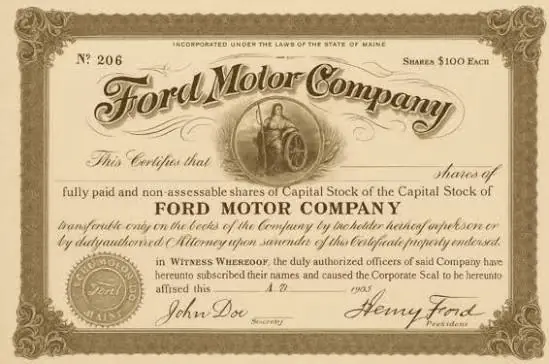
When that deck lands on your desk, start with one question:
Am I buying the products, or the factory?
Thank you.
Questions?
Scan to download the diligence handout and worksheet
vs.tomwest.io/diligence